title: Carbon Cycle Worksheet Answers
category: Worksheet Answers
Carbon Cycle Worksheet Answers can be as thrilling as a rollercoaster that never stops turning—especially when you realize how the same carbon atoms that buzz through your morning coffee also decide your school grades. Picture this: a stack of worksheets, the smell of ink, and your brain doing cartwheels to match carbon atoms with their life cycle partners. It’s like a detective mystery, but the culprit is a tiny molecule that makes plants grow, cars drive, and your grandma’s casserole turn into a culinary masterpiece. Welcome to the hilarious yet educational adventure of mastering carbon cycle worksheets, where every answer is a punchline waiting to be delivered!
A Quick Laugh: The Carbon Cycle in the Classroom
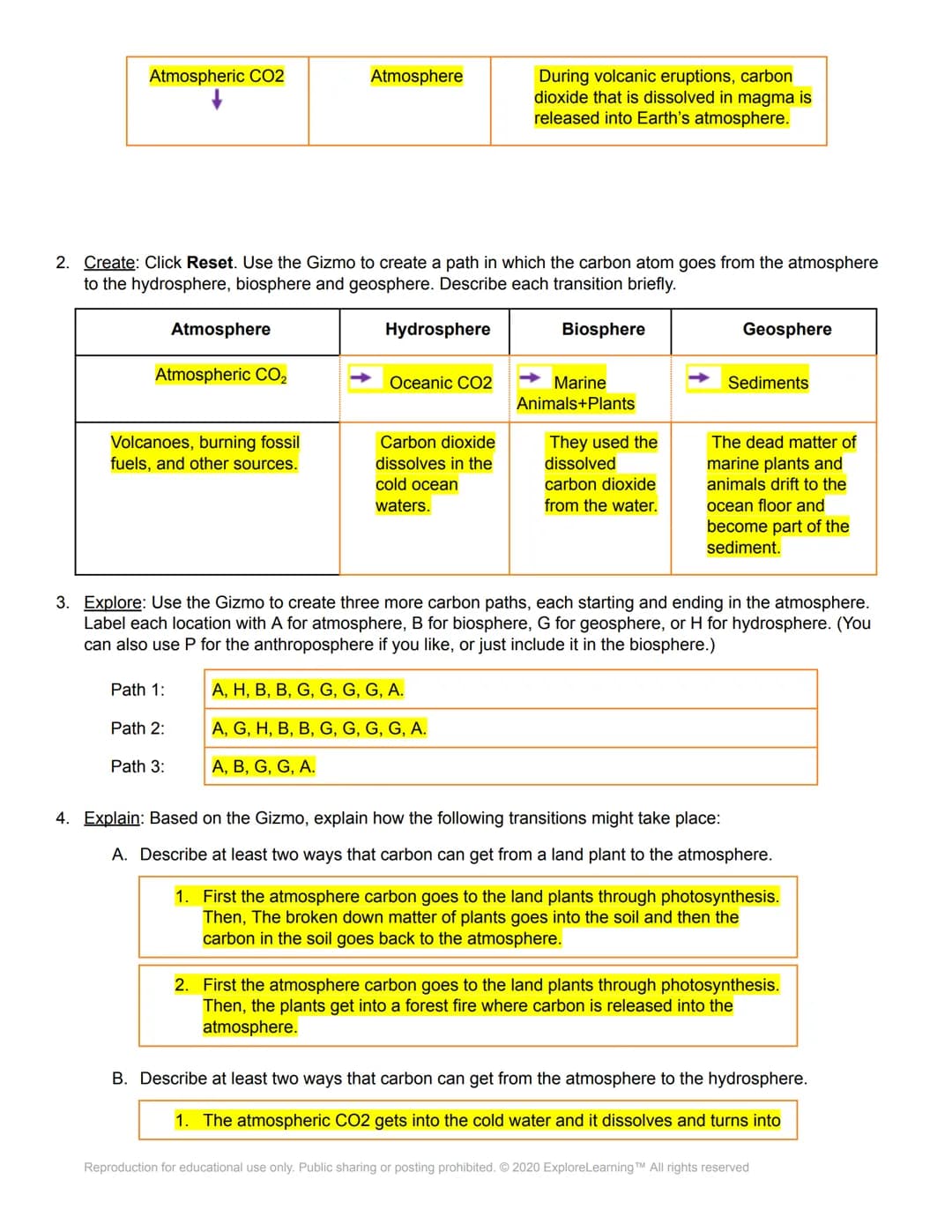
Let’s start with the obvious: the carbon cycle is the life‑and‑death saga of a humble carbon atom. It moves from the sky to the soil, from the ocean to your desk, and sometimes, if you’re lucky, straight into the pizza on your lunchbox. In the classroom, the carbon cycle is the subject that makes teachers look like wizards and students look like time‑traveling archaeologists. The worksheets that come with these lessons are the scrolls of knowledge—except some of them come with a side of confusion. When you see those worksheets, think of them as the treasure map that leads you to the ultimate prize: understanding how carbon keeps the planet humming. And, of course, the Carbon Cycle Worksheet Answers are the key that unlocks that treasure.
Why We Love a Good Carbon Quest
First, because it feels like you’re a detective—no magnifying glass needed, just a sharp pencil and a brain full of curiosity. Second, because every correct answer is a tiny celebration, like a confetti cannon for science nerds. And third, because the carbon cycle is literally the most important story ever told about our planet, so the stakes are high—like, “we might actually survive the next ice age” stakes. So, when the worksheet appears, you’re not just solving problems—you’re saving the world, one atom at a time.
Common Mistakes That Make You Feel Like a Carbon Bystander
- Assuming all carbon is the same—oh, how wrong you were!
- Confusing the roles of producers, consumers, and decomposers—like mixing up a chef’s hat with a janitor’s broom.
- Missing the subtle but crucial point that carbon can be stored in the atmosphere for centuries—time is your best friend, not your enemy.
Keep these pitfalls in mind as you dive deeper into the answers, and you’ll become the ultimate carbon cycle superhero.
Unlocking the Secrets: How to Decode the Worksheet Answers
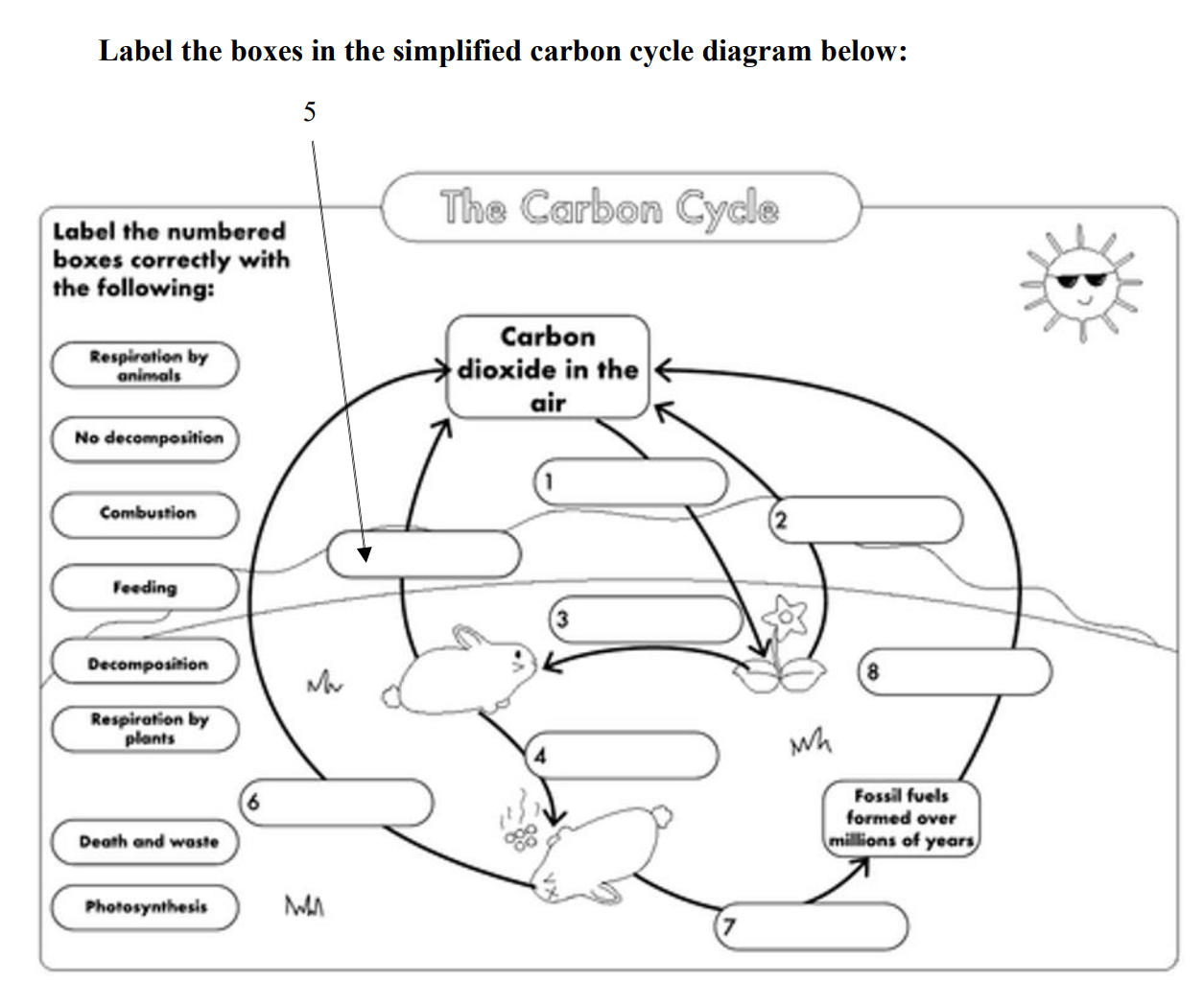
So you have your worksheet, and you’re staring at a sea of questions that look like a crossword puzzle in a language you haven’t mastered yet. Don’t panic—here’s how to translate the carbon code into a winning strategy. Think of it as learning a secret handshake that only carbon atoms and science teachers understand.
Step 1: Identify the Key Players
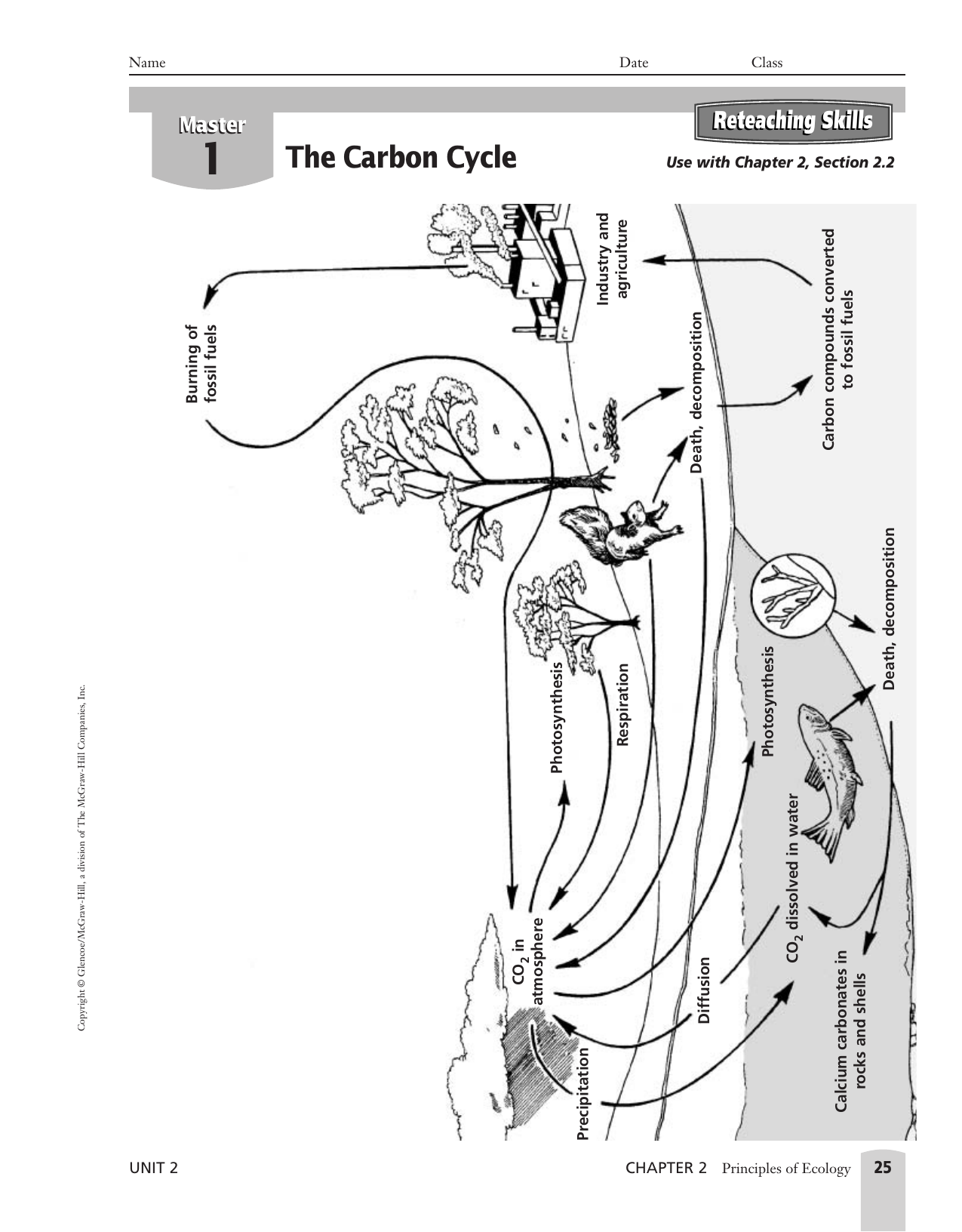
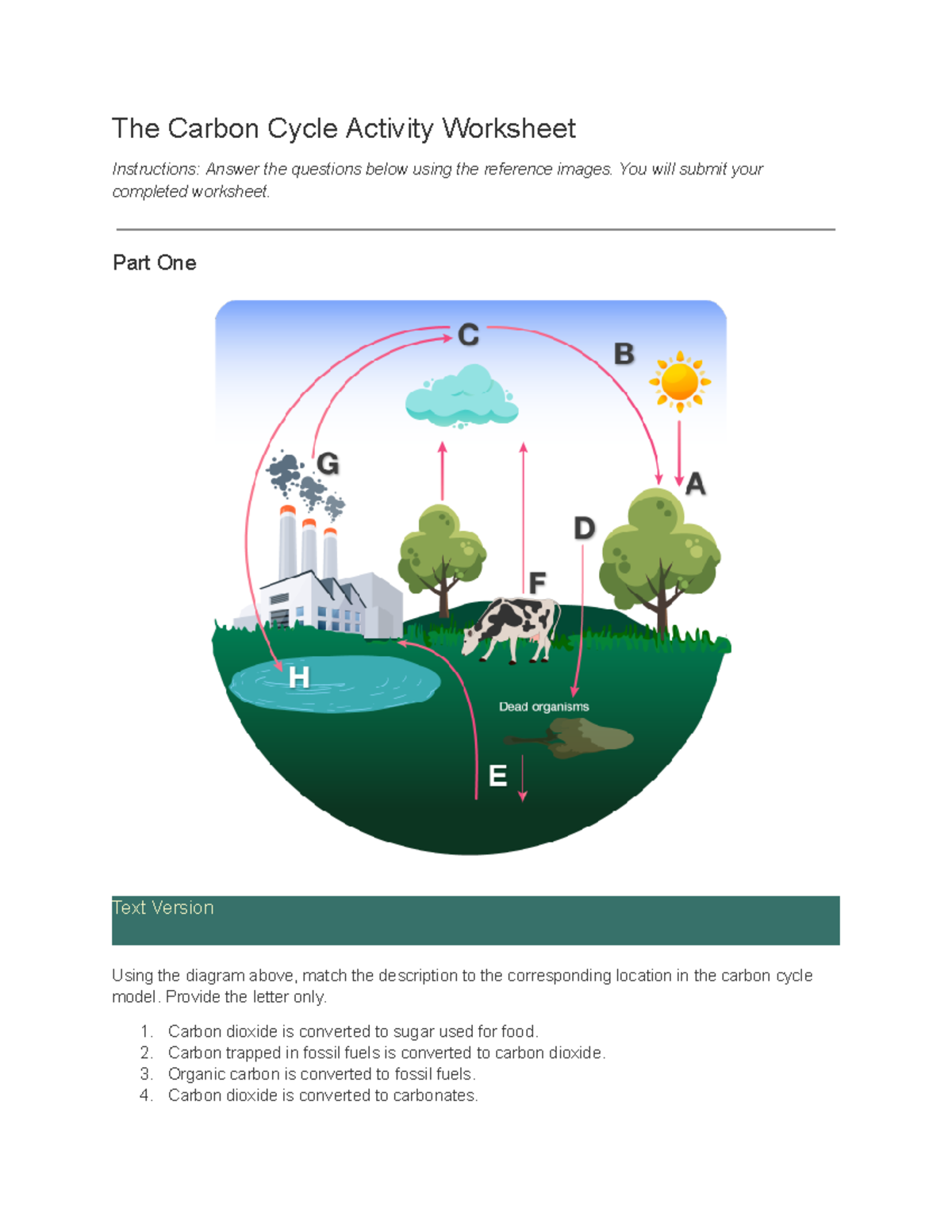
Every carbon cycle worksheet revolves around five main actors:
- Atmosphere—where CO₂ hangs out like a gossip blogger.
- Plants—nature’s very own green factories that photosynthesize like caffeinated chefs.
- Animals—who eat plants or other animals, and then exhale CO₂ like a breathless poet.
- Decomposers—bacteria and fungi that break down dead matter faster than a gossip column can get old.
- Geological stores—rocks, fossils, and ocean sediments that hold carbon for millennia.
By knowing who each actor is, you can anticipate their moves on the worksheet.
Step 2: Follow the Flowchart Mindfully
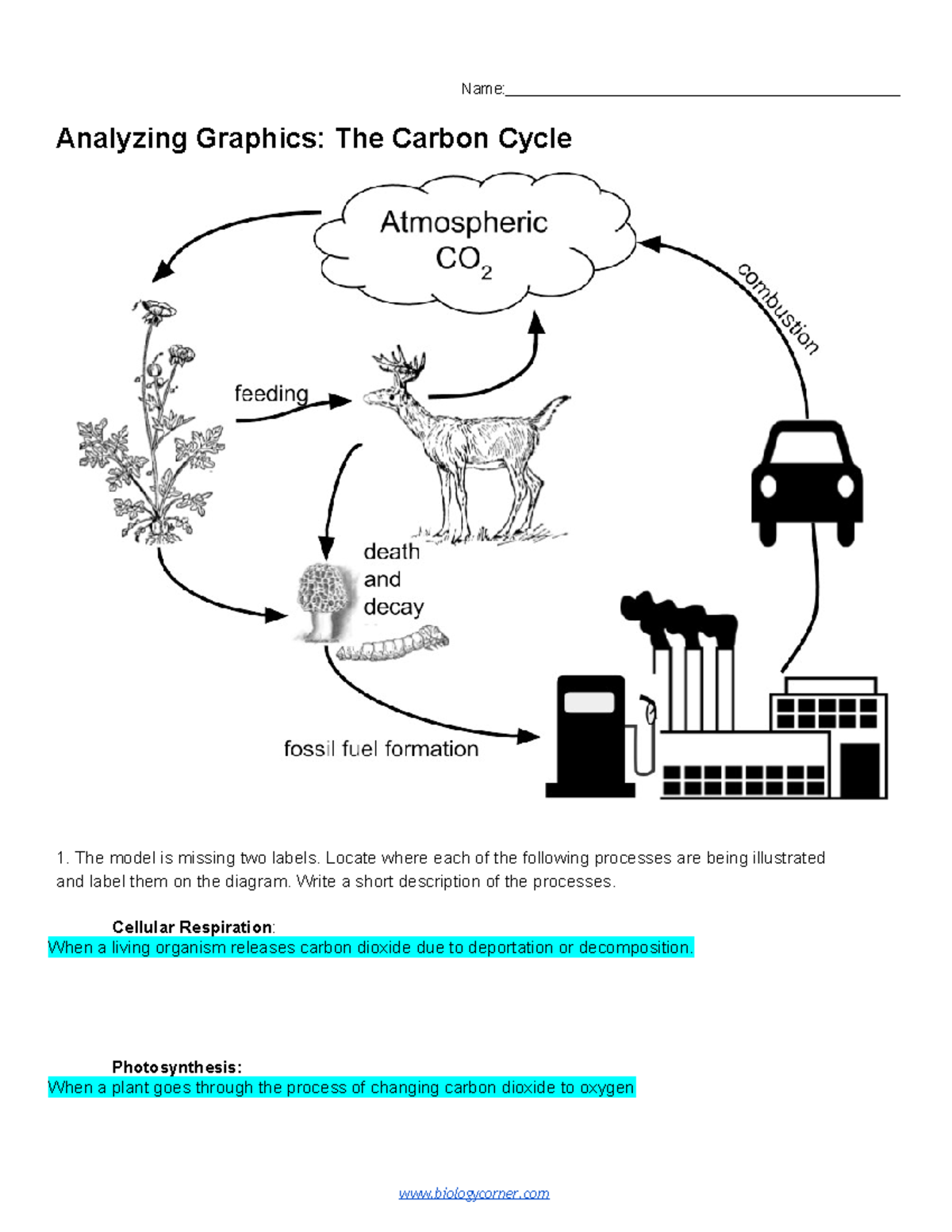
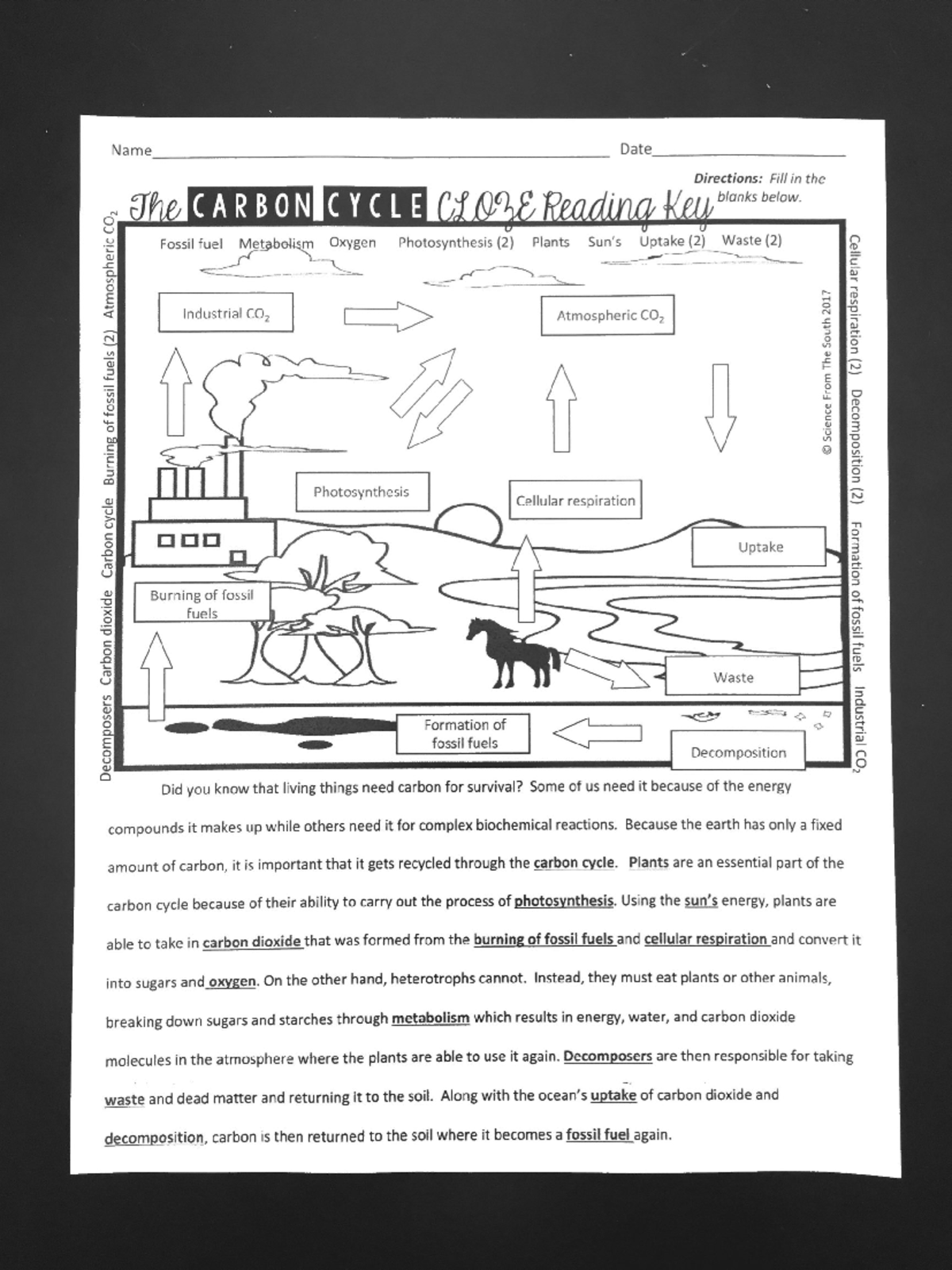
Visualize the worksheet as a flowchart. Each arrow points to the next step in the cycle. If you get stuck, imagine a carbon atom in a traffic jam on a highway. Use the arrows as traffic lights guiding it to the next destination. You’ll find that the answers often follow a logical sequence: photosynthesis → respiration → decomposition → mineralization → re‑absorption. It’s like a well‑rehearsed dance routine—just don’t step on each other’s toes.
Step 3: Cross‑Check With Real‑World Analogies
When a question seems impossible, bring a real‑world example to mind. For instance, if a worksheet asks how much CO₂ plants absorb during a sunny day, picture a giant salad bar in a greenhouse where every leaf is a salad leaf munching on sunlight. Or if the question involves the decomposition of a dead tree, think of a lumberjack’s log left in a rainstorm, slowly turning into rich, dark soil. These analogies make the abstract concrete and often reveal the hidden answer.
Step 4: Use the “Ask the Teacher” Trick
When all else fails, remember that teachers are essentially carbon cycle support staff. They’ve seen thousands of worksheets, so their brain is a Swiss Army knife of solutions. If the worksheet feels like a labyrinth, ask yourself what a teacher would say: “Remember, photosynthesis is the gateway to the carbon cycle. Start there!” This mental cue can instantly guide you toward the right answer.
Real-World Carbon: From Your Kitchen to the Planet

Now that you’re ready to decode the worksheet, let’s explore the real‑life carbon adventures that happen outside the classroom. Understanding how carbon behaves in everyday scenarios will help you see the worksheet’s relevance—and maybe inspire a fun science project for the weekend.
Carbon in the Kitchen
Think about that delicious pizza you’re about to eat. The dough, tomato sauce, cheese, and toppings all contain carbon, either in the form of carbohydrates, proteins, or fats. When you bite into the cheese, your body’s enzymes break down the protein into amino acids, and the carbon atoms exit as CO₂, traveling back to the atmosphere in a sigh of satisfaction. The carbon cycle is literally happening in your kitchen—just in a more dramatic, cheesy way.
Carbon in the Car
Every time you start your car, you’re watching a controlled combustion reaction. The carbon in gasoline reacts with oxygen, producing CO₂ and water vapor. That CO₂ then joins the atmosphere, contributing to the global carbon budget. When the teacher asks how transportation affects atmospheric CO₂, remember: the car’s exhaust is a tiny, but relentless, carbon contributor. So next time you see a car tailpipe, you’ll think of it as a tiny carbon factory on the move.
Carbon in the Forest
Forests are the world’s green lungs, but they’re also carbon warehouses. A single mature oak can store hundreds of tons of carbon in its wood. When the tree dies or is cut down, its stored carbon is released via decomposition or combustion. A worksheet question about forest carbon budgets is essentially asking how much of this stored carbon is still locked away versus how much is being released. Keep in mind that reforestation or afforestation can reverse the process—turning trees into carbon‑sequestration machines again.
Carbon in the Ocean
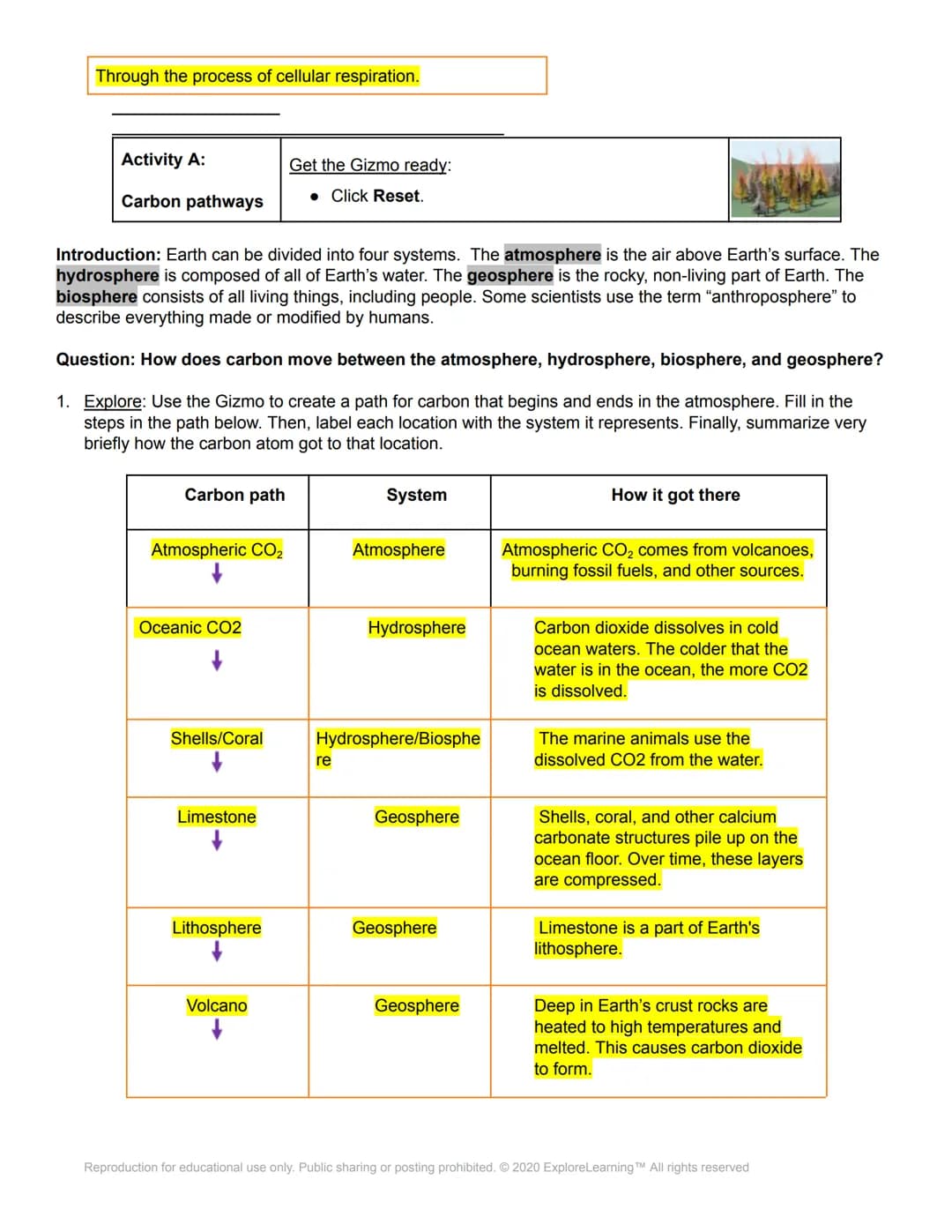
The oceans are a massive carbon sink. CO₂ dissolves into seawater, forming carbonic acid, and marine plants like phytoplankton absorb it for photosynthesis. These tiny organisms then form the base of the marine food chain. When they die, their remains settle to the ocean floor, creating sedimentary rock over millions of years. Worksheet problems about marine carbon often involve understanding how fast CO₂ is absorbed or how much is stored in the deep sea.
Practical Tips to Master Carbon Cycle Worksheets

Now that you’ve seen the big picture, let’s equip you with hands‑on tactics for tackling those worksheets with confidence and a grin.
1. Build a Cheat Sheet of Key Terms
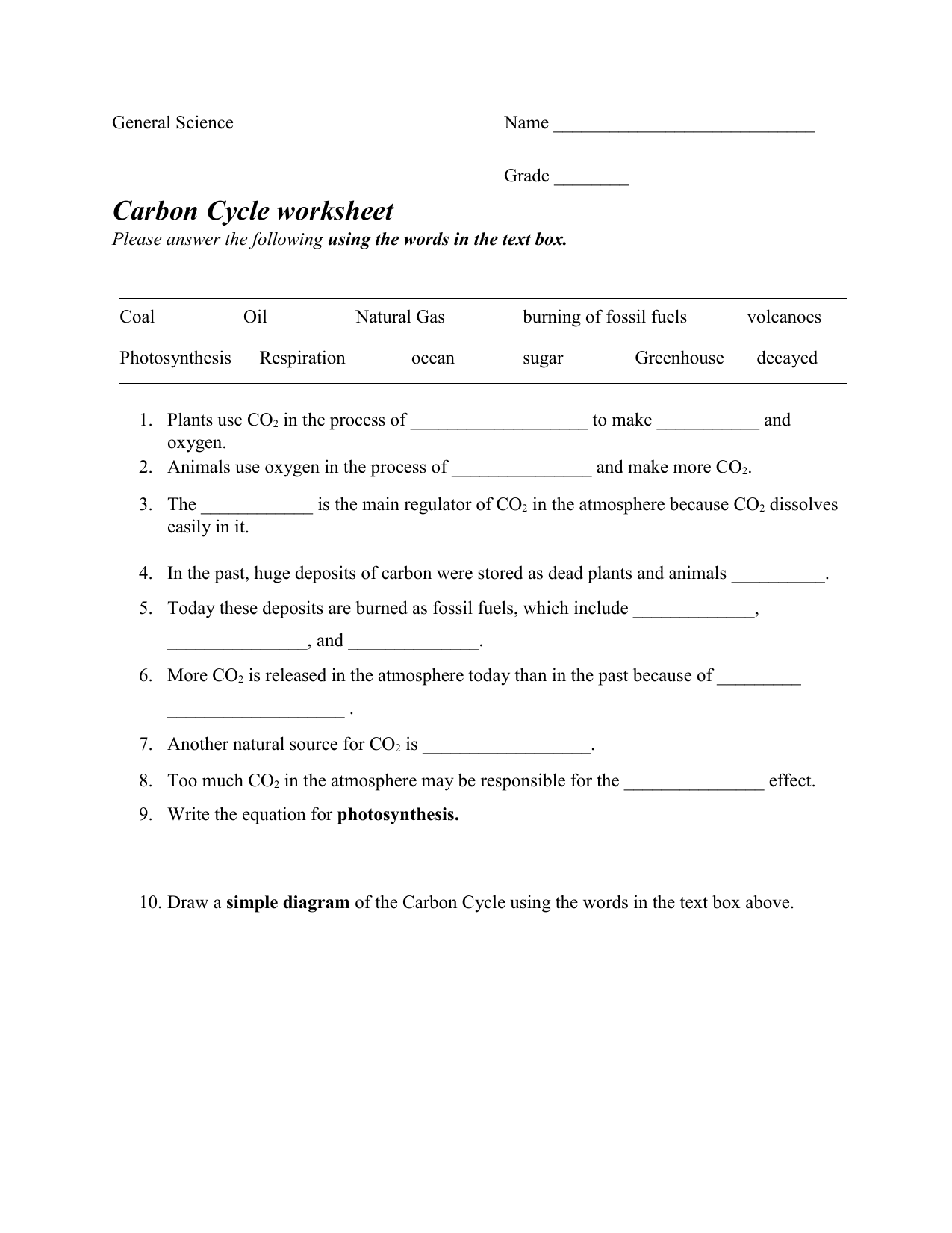
Write down the essential terms: photosynthesis, respiration, decomposition, mineralization, and sequestration. Add a quick definition next to each. When you’re stuck, glance at the cheat sheet, and you’ll immediately recognize the term’s role in the cycle. Think of it like having a cheat sheet for a game show—only you’re not cheating, you’re learning.
2. Create Visual Mind Maps
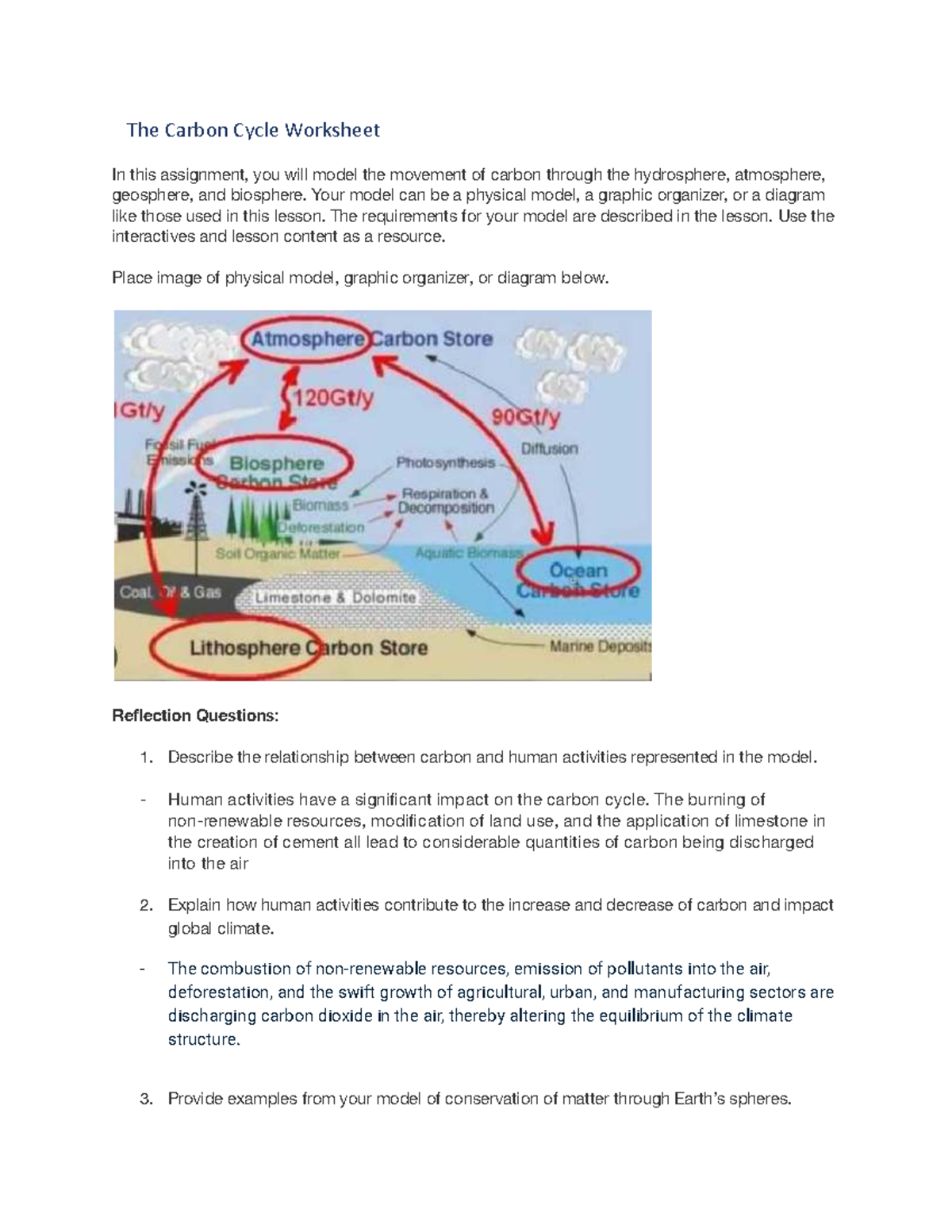
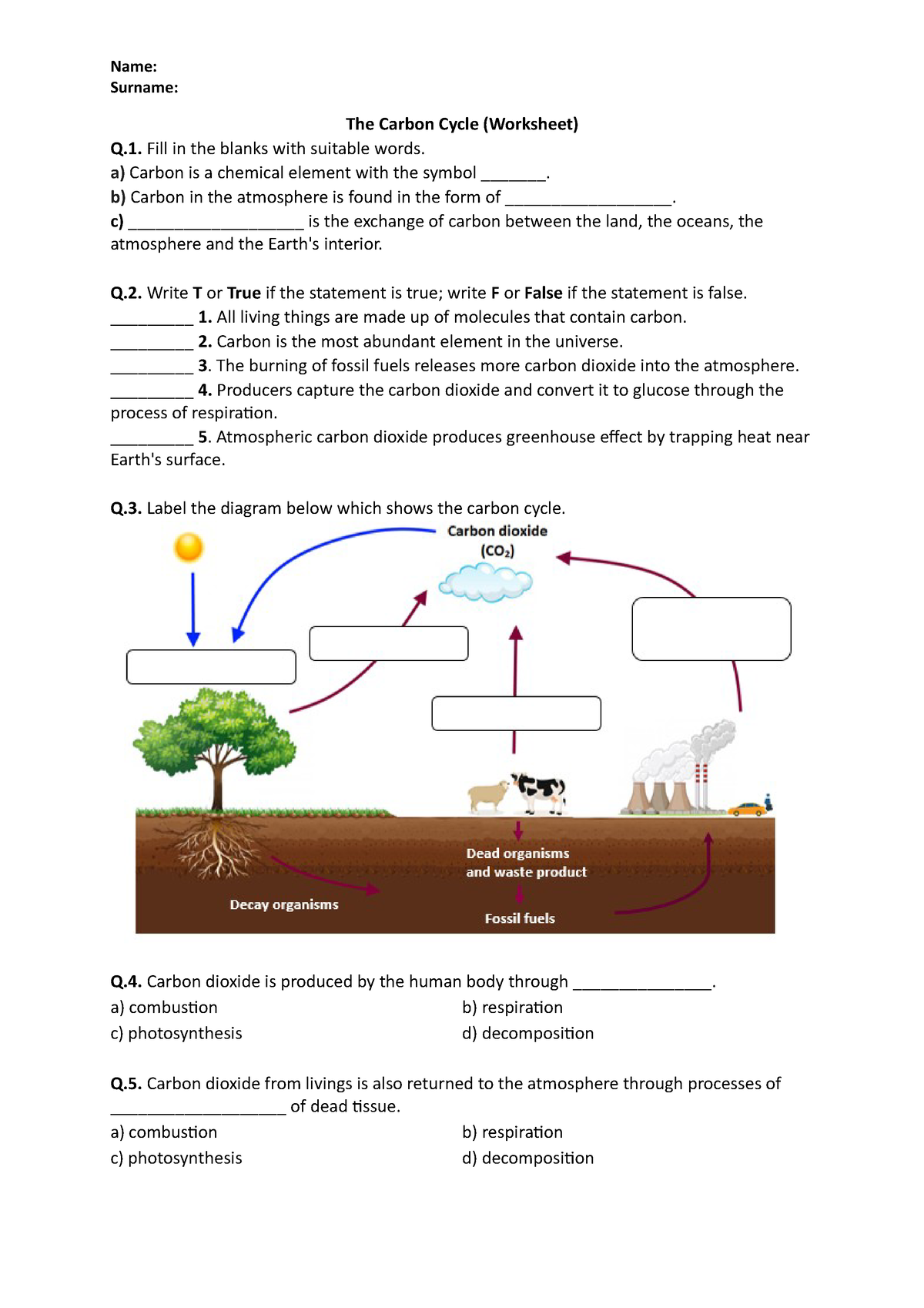
Draw a diagram of the carbon cycle on a large sheet of paper. Use arrows to show direction and label each stage with a short mnemonic (e.g., “Plants = Photosynthesis (P), Animals = Respiration (R), Decomposers = Decomposition (D)”). When the worksheet asks “Which process reduces atmospheric CO₂?” you’ll see that the answer is the one that has a “P” arrow going downwards—photosynthesis!
3. Practice with Flashcards
On one side of a card, write a question such as “What process turns dead organic matter into CO₂?” On the other side, write the answer: decomposition. Shuffle the deck and test yourself daily. The repetition will lock the concepts into muscle memory, making the worksheet questions feel like a walk in the park.
4. Turn Questions into Stories
When a worksheet question seems abstract, turn it into a short story. For example, “A tree falls, and its carbon is released.” Imagine a cartoon tree with a cape falling in a dramatic scene, and the carbon atoms as tiny superheroes running to the atmosphere. Storytelling makes it memorable and less intimidating.
5. Collaborate in Study Groups
Carbon cycle conversations are like science club potlucks—everyone brings a dish (an idea), and you share. Discuss each worksheet question with peers, and explain your reasoning. Explaining concepts to others is the most effective way to cement them in your own mind.
6. Keep a “Carbon Diary” of Daily Activities
Track how often you use cars, eat meat, or consume plastic. Each activity has a carbon footprint. At the end of the week, compare your diary to the worksheet answers. This real‑world application will help you understand why the carbon cycle matters beyond textbook examples.
When the Answers Play Tricks on You (and How to Outsmart Them)
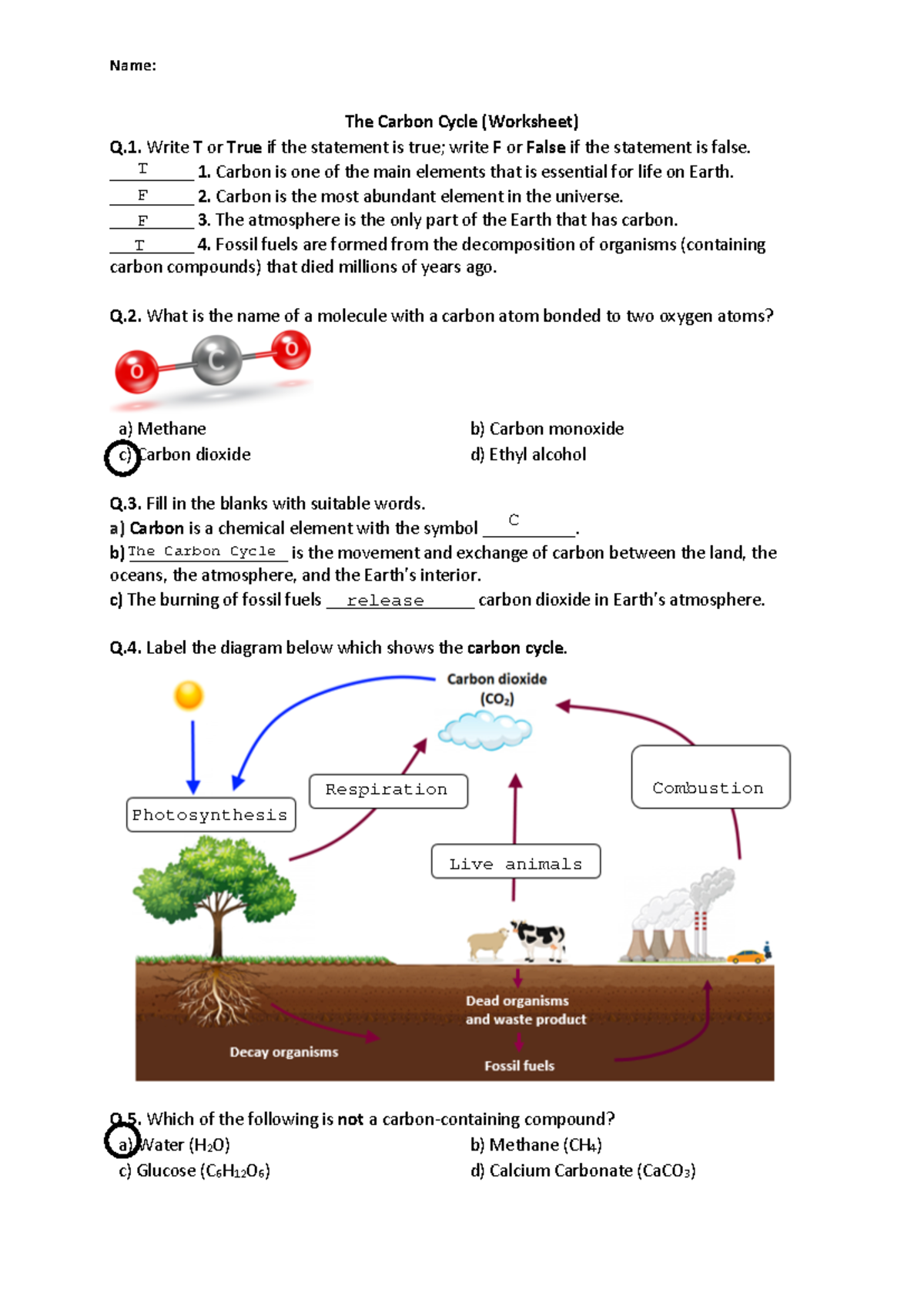
Even the best worksheets can throw curveballs. Some questions are designed to test whether you’ve truly grasped the concepts, not just memorized facts. Here’s how to outsmart those tricky ones.
1. Identify the “Red Herring” Words
Tricky questions often include words that mislead, such as “rapidly” or “slowly.” For example, “Which process is the fastest carbon sequestration method?” The trick is to understand that “rapidly” doesn’t necessarily mean “most efficient.” Double‑check your understanding of rates versus totals.
2. Question the Assumptions
When a worksheet asks, “How much CO₂ would a forest absorb if it was cut down?” you must question the assumption that cutting down a forest immediately releases all stored carbon. In reality, some carbon remains in the soil. Spotting these subtle assumptions will give you an edge.
3. Use the “What If” Strategy
For hypothetical questions, ask yourself “what if” scenarios. For instance, “What if the ocean temperature rises by 2°C?” This method forces you to apply the principle rather than reciting memorized facts, making the answer less obvious.
4. Look for the “Common Theme” Across Questions
If several questions in a worksheet revolve around the same concept, it’s likely that the correct answer is linked. Spotting these themes helps you eliminate distractors efficiently.
5. Time Yourself
Set a timer for each worksheet section. When time is tight, you’ll naturally focus on key points, which helps prevent you from getting sidetracked by complex but irrelevant details.
The Big Picture: Why Knowing the Answers Matters
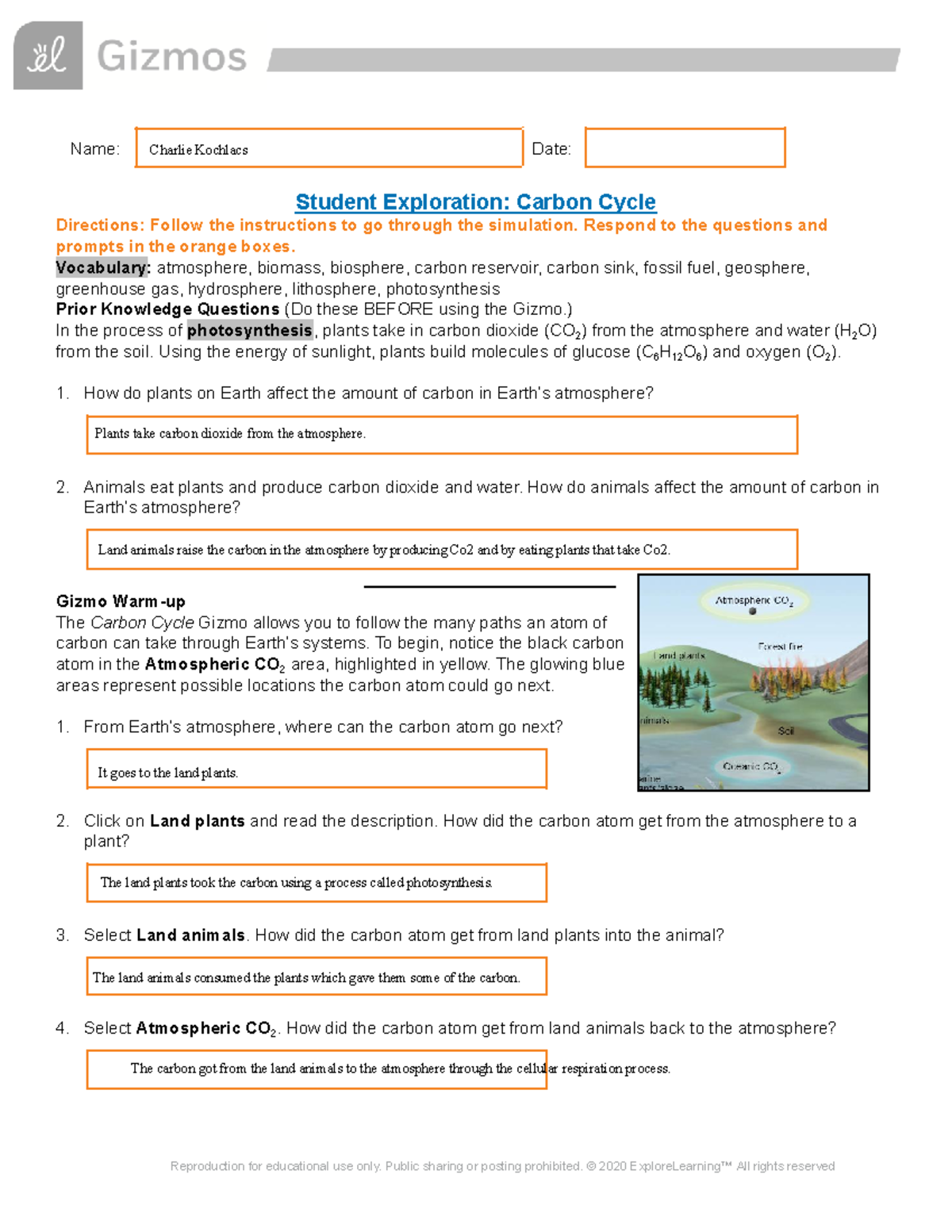
Understanding Carbon Cycle Worksheet Answers goes beyond passing tests. It equips you with a framework for tackling real‑world environmental challenges. Here’s why the knowledge matters:
- Climate Change Insight: You’ll grasp how increased atmospheric CO₂ leads to global warming.
- Conservation Awareness: You’ll recognize how preserving forests and wetlands acts as a natural carbon sink.
- Sustainable Living: You’ll make smarter choices about diet, transportation, and energy consumption.
- Scientific Literacy: You’ll be able to interpret scientific reports and news about carbon emissions.
- Future Careers: Whether you aim to be an environmental scientist, policy maker, or just a well‑informed citizen, carbon knowledge is essential.
In short, mastering these answers is like having a backstage pass to the planet’s greatest performance: the perpetual carbon dance. By knowing how the carbon cycle works, you can predict, influence, and even help sustain the rhythm of life on Earth.
In conclusion, the Carbon Cycle Worksheet Answers are not just numbers and equations; they’re the keys that unlock a deeper understanding of our world’s most vital process. With a dash of humor, a sprinkle of real‑world context, and a solid strategy for decoding each question, you’re now ready to tackle any worksheet that comes your way. So grab your pencil, summon your inner carbon detective, and let’s make science a little less scary and a lot more fun—one answer at a time. Happy learning!